Are dirt, dust, and stains messing up your slate floors? While slate offers an incredibly natural and visually appealing look, plus a very sturdy surface, it also takes quite a lot of effort to maintain.
Regardless of the area of the house such as the kitchen, bathroom, or outside containing slate flooring, it is essential to know how to care for slate flooring in the right way. This is important since improperly taking care of slate tiles can lead to the various damages to the stone.
One of the advantages of slate tile maintenance is that it does not require any advanced equipment. Just stick to the right cleaning measures, your surface won’t pose any problems for you.
Why Is Proper Slate Tile Cleaning Important?
Slate is a stone that is naturally porous or rough due to which deposits like dirt and debris may get accumulated over time in the surface crevices. Hence, it needs to be periodically cleaned and maintained.
The proper maintenance is beneficial in a number of ways:
- Preserves natural appearance: The cleaning process for stone is designed in a way that it doesn’t interfere with the aesthetic appeal of the stone.
- Prevents stubborn stains: Regular cleaning prevents any kind of stain from penetrating the surface.
- Protects the finish: By selecting suitable cleaning products, the chances of damaging the stone are greatly reduced.
- Improves hygiene: The best way to clean is when you are able to remove all kinds of dirt and grime.
- Extends surface life: It can make it easier to maintain the stone surface if you take proper care of it.
Essential Cleaning Tools and Supplies
Prepare all necessary tools before you start. Proper use of the right materials not only simplifies the cleaning process but also protects the stone.
| Cleaning tool | Purpose |
| Soft-bristled broom | Removing loose dirt |
| Microfiber mop | Cleaning the surface |
| pH-neutral stone cleaner | Washing slate tiles |
| Microfiber cloth | Wiping spills and residue |
| Soft cleaning brush | Cleaning textured areas |
| Clean water | Rinsing the surface |
Stay away from any cleaners that contain acids, scrubbing pads that are too rough or any item that isn’t recommended specifically for natural stone.
How to Clean Slate Tiles in 6 Simple Steps
Step 1: Remove Loose Dust and Debris
First,you want to vacuum the floor thoroughly or sweep it in a gentle way using a fine-haired broom. Clean up the corners, grooves, gaps, and textured surfaces that are prone to collecting dust and dirt and make sure that you clean these thoroughly in a dry state so that the tiny particles won’t cause scratch marks on the surface when a damp cleaning agent is used.
In places with a lot of dust like Dubai, one must clean the slate floors regularly to keep them better looking.
Step 2: Prepare a Suitable Cleaning Solution
Take a clean bucket next to mix and add warm water into the bucket. The pH-neutral product may be mixed afterwards. Do not mix the product at a higher concentration than it is recommended by its manufacturer. Do not use vinegar, water, or acid-based cleaning solutions as your cleaning agent because they can be detrimental to the slate and the surrounding grout .
Using a right type of solution ensures that you not only take care of your everyday stains but also protect your stone from any sort of harm.
Step 3: Test the Cleaner on a Small Area
Check the results after using the cleaning solution for the whole piece of material only if it worked on a tiny sample piece. Rub off the surface with just a bit cleaner and let it dry.
However, you should only clean the whole piece if the test sample has come up well, and don’t waste time and materials if the initial sample doesn’t get better. Then just put a little bit more cleaner onto the surface and rub it dry,
Step 4: Mop the Slate Tiles Gently
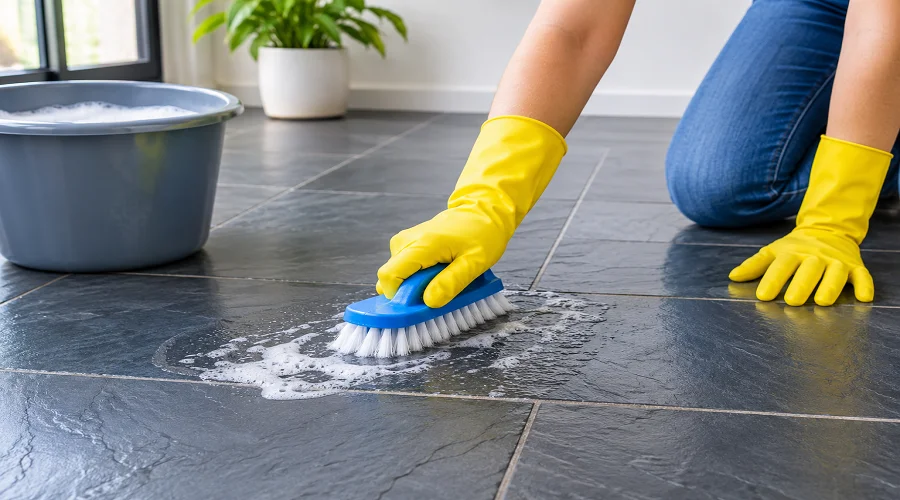
Firstly, give your slate tiles a light cleaning with a damp cloth to remove any surface dirt only. Next, use a microfiber mop. Wet it in a cleaning solution and then wring it out as much as you can. Working area by area, glide the mop over the ground gently, getting the matted on dirt and debris off from the surface of the stone slate tiles.
Remember, do not pour too much liquid on the tiles to prevent the grout getting damaged through water. When it comes to textured slate surfaces, a soft cleaning brush should be used to help clean crevices.
Step 5: Remove Remaining Residue
In case the cleaner instructions include rinsing, then using a fresh mop together with clean water to rinse the leftover solutions.
You should change water every time it appears muddy, as otherwise the cleaning residue will result in slate floors turning cloudy or getting even dirtier. A specially formulated surface cleaning product is a must in case the spill was light or if it became a deep-stained problem. Otherwise, you would likely ruin the floor.
Step 6: Dry the Surface Properly
Make sure to dry the surface properly after you finish cleaning the stone. With a dry mop, or a microfiber cloth, wipe or dry the floor to remove any water left. The wetness left behind will dry up by itself in a spot where there’s good circulation of air. You should avoid walking on the damp tiles as the floor might be quite slippery.
Check the final state of your property by visually inspecting the clean floor to determine if there are any stains or whether you missed the spots where tiles meet and especially the corners.
Common Slate Tile Cleaning Mistakes to Avoid
You may do a lot to keep your slate looking beautiful with regular cleaning, however, if you make some of the mistakes, your cleaning will turn out to be a complete disaster.
- Using vinegar or other acidic cleaning solutions.
- Applying excessive water during mopping.
- Scrubbing with steel wool or abrasive brushes.
- Using ordinary floor polish without checking compatibility.
- Allowing spills to remain on the surface for long periods.
- Ignoring grout lines and textured sections.
Make sure to select cleaning items that are made for natural stone.
Keep Your Slate Tiles Looking Beautiful
Slate tiles for sure can give a great and stylish touch to the appearance of a house, but in order to keep them looking their best you must have them cleaned periodically. Along with the sweeping or mopping of your floor in general you might want to have the tiles themselves washed with the help of a surface-specific chemical cleaner and then you need to make sure that the slate tiles are totally dried afterwards.
You are advised to take a few precautions to keep your slate floor in good condition. Wipe any spills right away, use only mild cleaning products, also avoid scratches as it is one of the ways you can prevent your slates from damage.
With a little effort and Clean and Shine help, you will be able to keep your slate floors looking great for years. Reach out to us for more details.
5 Frequently Asked Questions
1. What is the best cleaner for slate tiles?
pH neutral cleaners are mainly made to clean natural stone. Stick strictly to the manufacturer’s instructions, however, before using the product to clean up the whole area, you should do the test run in a small area.
2. Can I use vinegar to clean slate floors?
No,vinegars are not cleaning agents for a natural stone surface such as slate. Because of their very acidic nature, vinegars could potentially damage the stone if a solution that is highly acidic is used.
3. How do I remove stubborn stains from slate tiles?
Beyond selecting the right stone-cleaners which are safe for the sort of stain that you have, it is highly recommended to read the user guide of a product very carefully and comply with all the directions. In the case of very dirty and old stains or very hard stains, you should get the advice of the professionals.
4. Do slate tiles need sealing?
Some slate types are enhanced significantly with the help of penetrating sealers. Unfortunately not all types of slate benefit from the same treatment as these sealers. Get in touch with a stone-care expert or an installer for product recommendation and timing when to use them.
5. Can I use a steam mop on slate tiles?
Do not use steam cleaning unless the manufacturer of the tiles as well as the grouts and the surface protection indicate that steam cleaning is appropriate for your tiles.