Have you ever wiped a mark from your marble countertop, only to find that it is still there? The problem may not be dirt. It could be an etch mark or a stain, and each needs a different treatment.
Marble is susceptible to acids, and at the same time liquids and oils can infiltrate marble’s pores. The understanding of the differences between these two types of substances helps to apply the right care product. Using the wrong type of cleaner can either cause bigger marks or destroy the surrounding surface.
A careful examination of the surface will assist in the choice of the proper way to restore the marble.
Etching or staining: what is the difference?
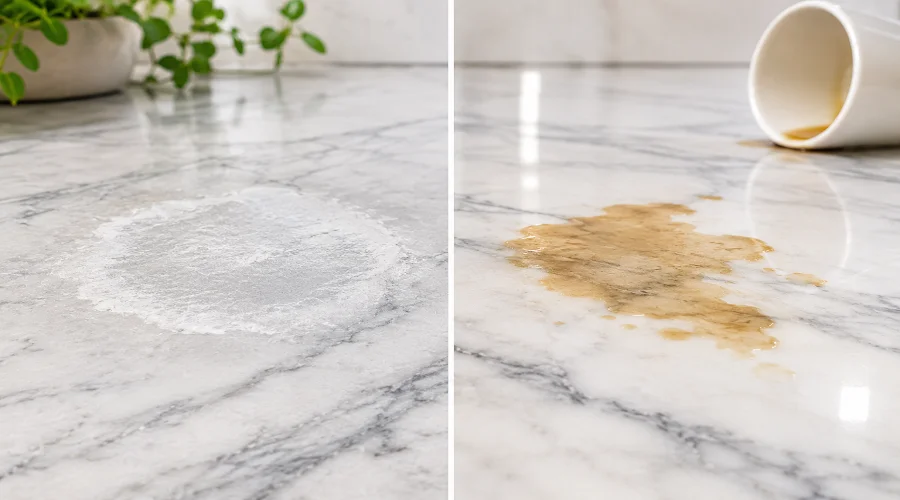
Etching is a chemical process that changes the surface of marble. Any acid can attack and take away a bit of the stone’s finish, producing a patch that appears dull, cloudy, or lighter in color than the rest of the stone. It may feel slightly rough, although some etch marks are visible only because they have lost their shine.
A stain is a change in colour caused by a substance entering the pores of the stone. It may look brown, yellow, orange, black, or greasy, depending on its source. The surface can remain smooth and shiny even when the discolouration is obvious.
Remember: etching changes the finish; staining changes the colour. One spill can cause both.
Look closely at the mark
A pale ring where a glass stood, or a dull splash near a lemon or vinegar bottle, may indicate etching. Dark patches around cooking areas may be oil stains. Brown marks near metal accessories could be rust, while coffee may leave yellow or brown discolouration.
White shower marks may be hard-water deposits on the surface, not damage within the marble. If a pH-neutral stone cleaner does not remove a mark, stop before trying stronger products.
Fixing etching without causing more damage
Clean with a pH-neutral stone cleaner and a soft microfiber cloth. If the area remains dull, it is probably not ordinary dirt.
Very light etching may improve with a polishing powder specifically formulated for marble. Test it in a hidden spot first. Avoid scouring pads, abrasive powders, vinegar, lemon juice, and general bathroom cleaners.
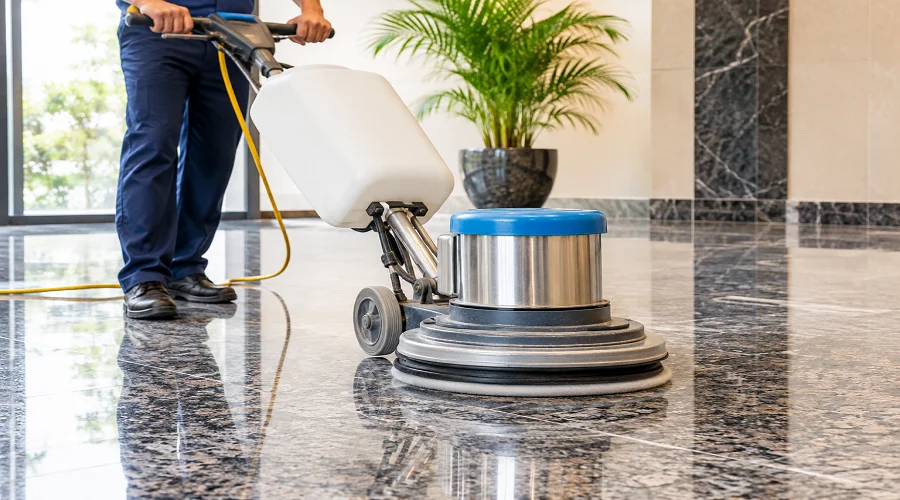
Deeper marks, large dull patches, or uneven finishes usually need professional honing and polishing. Honing removes a very thin layer of damaged stone; polishing restores the chosen finish. The right process depends on the marble and the depth of damage, so avoid repeated DIY attempts if the mark is prominent.
Removing stains from marble
Treatment depends on what has entered the stone. Cooking oil, butter, or cosmetics can leave dark patches. Coffee, tea, and food may create brown or yellow marks. Rust can leave orange or reddish-brown discolouration, while ink may leave a coloured spot.
A marble-safe poultice can help with some absorbed stains. This paste draws certain staining substances out of porous stone as it dries. Use a product intended for marble and follow its instructions. Different stains need different treatments.
Be especially careful with rust. Many ordinary rust removers contain acids that can etch marble. Choose a treatment labelled safe for marble or ask a restoration professional. Avoid experimenting with bleach, solvents, or homemade mixtures; they may discolour the stone or damage its finish.
When a spill causes both problems
Some substances can stain and etch at the same time. Red wine, for instance, may leave colour behind while its acidity affects the polished surface. Removing the colour does not necessarily restore the shine. The area may need stain treatment first, followed by polishing.
If a mark becomes lighter but the patch still looks cloudy, the remaining issue may be etching rather than a stain that needs more scrubbing.
Common mistakes to avoid
Avoid these shortcuts:
- Do not clean marble with vinegar, lemon, or acidic descalers.
- Do not scrub with steel wool or rough scouring pads.
- Do not assume bleach or an all-purpose cleaner is safe for natural stone.
- Do not apply several stain removers one after another.
- Do not polish a mark before confirming that it is surface damage.
Check labels for natural-stone compatibility.
Everyday care in a Dubai home
Sweep or dust-mop regularly. Wipe spills promptly and use coasters under drinks and trays beneath bathroom products.
Use a pH-neutral marble cleaner and soft cloth. A suitable impregnating sealer may reduce absorption, but it does not make marble resistant to acids.
At home, check kitchen counters and bathroom vanities regularly, as small spills can go unnoticed around taps, appliances, and containers. Catching a mark early does not guarantee it can be removed at home, but it gives you a better chance of choosing a suitable treatment before the affected area becomes harder to restore.
When is professional restoration worthwhile?
Please seek a professional evaluation if stains cover a large area, if there are uneven surfaces, staining due to rust or oil continues, or if the cleaning performed by yourself has not improved the situation. The specialist will determine if the surface requires cleaning or (a combination of) cleaning, polishing, honing, and polishing.
Clean and Shine provides cleaning and marble maintenance services to the residents of Dubai. If your floor or countertop has lost its look, you can get a complete evaluation to identify the issue and the best remedy.
Identify the problem before choosing a fix
Etching and stains can look alike, but they are different problems. Etching damages the finish; a stain changes the stone’s colour. Clean gently and avoid harsh products. Consulting an expert is beneficial in case the cause is unknown. Proper care of marble helps in preventing damage and keeping up the beauty of the stone.
Further, regular maintenance helps preserve its natural look for a long time. Are you looking for expert help for your marble surfaces? Look no further than Clean and Shine in Dubai for professional marble cleaning and restoration services.
Our team will help to figure out what the issue is with your marble surfaces and propose you the right solution to bring back your marble’s natural beauty and luster. Call Clean and Shine today and make sure your marble is treated properly.
Frequently asked questions
Can marble etching be removed?
Light etching may improve with a marble-specific polishing product. Deeper damage usually needs professional honing and polishing.
Will sealing stop marble etching?
No. Sealing can reduce absorption, but it cannot prevent acids from reacting with marble.
Can baking soda remove a marble stain?
Some poultice methods use baking soda, but it is not a universal solution. Choose a marble-safe treatment suited to the stain.
Why does my marble still look dull after cleaning?
The area may be etched or worn rather than dirty. More cleaning will not restore a damaged finish.
Should I polish the whole floor?
Not automatically. Identify the cause and extent of the damage first. A professional can advise whether spot treatment or broader restoration is appropriate.