Granite stays a favourite in Dubai homes and offices, and honestly its natural patterns and toughness explain why. Still, sand, foot traffic, spills and unsuitable cleaners can leave it looking dull or marked.
If mopping no longer brings back the finish, does the floor need replacing? Not necessarily. Granite floor polishing may improve the appearance of worn stone, but the right treatment depends on what has caused the problem. Knowing the process helps you choose.
Why Granite Floors Lose Their Shine
Granite is hard, but not immune to wear. Fine sand under shoes can rub against the surface, leaving entrances, hallways and kitchens less reflective.
Cleaning products can also leave a film. Too much detergent, unsuitable chemicals or abrasive pads may make the floor appear cloudy. Sometimes a deep clean is enough; scratches or uneven patches need specialist attention.
Cleaning, Honing and Polishing: What Is the Difference?
These terms describe different levels of floor care. Dirt and residue are removed by cleaning. Honing makes the stone smoother by using abrasives and can fix many surface imperfections in the process. Polishing is intended to improve the finish and create more reflectivity when a glossy result is wanted.
They are not interchangeable: residue may need cleaning, while scratches may require refinement before polishing.
| Treatment | When it may be used | Main purpose |
| Deep cleaning | Dirt or product residue | Clean the surface |
| Honing | Light scratches or uneven finish | Refine the stone |
| Polishing | Dull appearance | Improve shine |
| Stain treatment | Specific marks | Treat discolouration |
| Sealing | Porous or absorbent stone | Slow liquid absorption |
A specialist should inspect the granite before recommending a treatment. Granite finishes vary, so one method will not suit every floor.
What Happens During Professional Granite Polishing?
The first step is to inspect the surface thoroughly for any scratches, stains, and previously applied coatings. A technician will then discuss and decide the type of finish you would like and do the preparations of protecting any surfaces nearby.
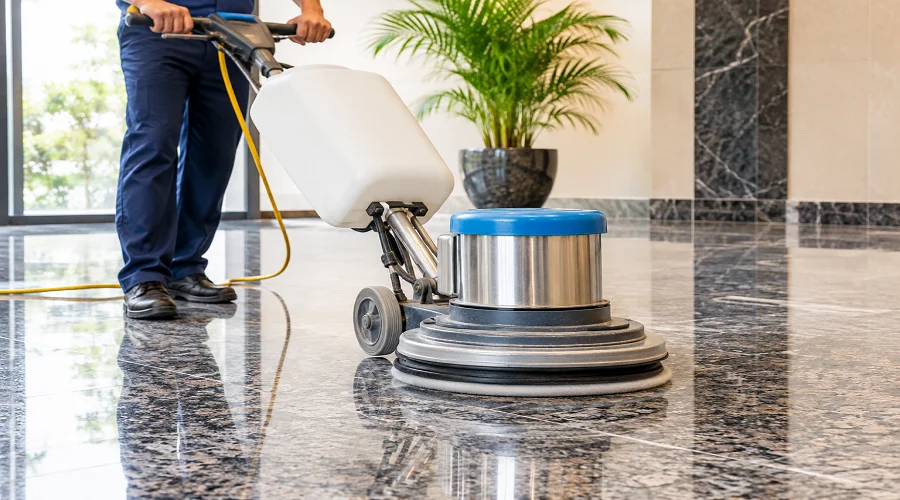
Loose grit will be the first thing the cleaner gets rid of because floor particles that drag can cause more scratches to the floor. The surface is then cleaned with products suitable for natural stone. If the granite has wear that ordinary cleaning cannot correct, professionals may use specialist machinery and diamond abrasives to refine it.
Once the surface is ready, a suitable polishing method is selected. The floor is treated in sections, then cleaned and checked. A sealer may be recommended if the stone would benefit from added resistance to liquid absorption. Sealing does not make granite scratch-proof or completely stain-proof.
Choosing the Right Finish for Your Home
A glossy finish reflects light and can give an entrance or living room a smart appearance. It may, however, show footprints and dust more clearly. A honed or satin finish has less reflection and creates a softer look.
Consider how the room is used: a busy family home may need easy maintenance, while a reception area may suit a polished surface. Ask the contractor what finish is realistic for your existing granite rather than choosing from a photograph alone.
Common Problems in Dubai Homes
Dust and fine sand are problems that happen quite regularly, particularly in the case of properties situated near highways or buildings under construction. They settle around the entrance and under the furniture. Regular dry dust removal helps stop grit from being moved across the floor.
Spills are one of the issues we face. For example, oil, coffee and other liquids may create stains if they are not removed quickly. Besides, heavy or acidic cleaners can have a negative impact on some stone treatments and finishes as well.
Avoid experimenting with vinegar, bleach or abrasive powders. Use a product labelled suitable for natural stone and follow its directions.
Furniture movement can leave scratches too. Lift chairs and tables when moving them, and fit protective pads beneath their legs. These habits reduce wear.
How to Choose a Reliable Polishing Service
Do not choose a company on price alone. Ask for an inspection and a clear explanation of the recommended process. A quotation should state the areas included, whether deep cleaning, honing, polishing, repairs or sealing are covered, and whether extra charges may apply.
Ask for a test area if the granite has an unusual colour or previous coating. Confirm the schedule and when furniture can be moved back. Remember that no treatment can guarantee your stone will look new again every time. Depending on the stone, some scratches or stains might remain.
Also, before the actual polishing or scrubbing, you should move away furniture and keep children from interfering. The same goes for pets. Ask whether the room must remain unused while the floor dries. If rooms are being treated, agree on the order of work so you can plan around it.
Ask how to care for floors afterwards. The contractor should explain which cleaner to use, when the surface can be walked on and whether protective treatment needs time to settle. Following these instructions helps protect the finish.
Bring Back the Best of Your Granite
Has your floor lost the finish that made you choose granite in the first place? Before considering replacement, find out whether the surface can be improved. The right treatment can improve its appearance, while regular care helps maintain the result.
Clean and Shine provides professional cleaning services in Dubai and can help you explore suitable care for your flooring. Arrange an assessment, explain the finish you have in mind and ask what work your granite actually needs. A cleaner, better-maintained floor can make your entire space feel more welcoming. Contact us now!
Frequently Asked Questions
1. How often should granite floors be polished?
There is no fixed schedule. It depends on foot traffic, maintenance and the appearance you want. Keeping up with regular cleaning can stretch the time between treatments.
2. Can polishing remove scratches?
Polishing will often give the surface a nicer finish. But if scratches are already there, honing or a mechanical refinement step usually has to come first. Really deep damage might call for extra restoration on top of that.
3. Is granite polishing suitable for offices?
Yes. It can be suitable for offices, shops and homes. The method should match the stone and the amount of daily use.
4. Does granite need sealing after polishing?
Not every granite floor needs sealing. A professional can assess its porosity and advise whether an appropriate impregnating sealer would be useful.
5. How long does the service take?
Timing depends on the area and treatment; request an estimate after inspection.